










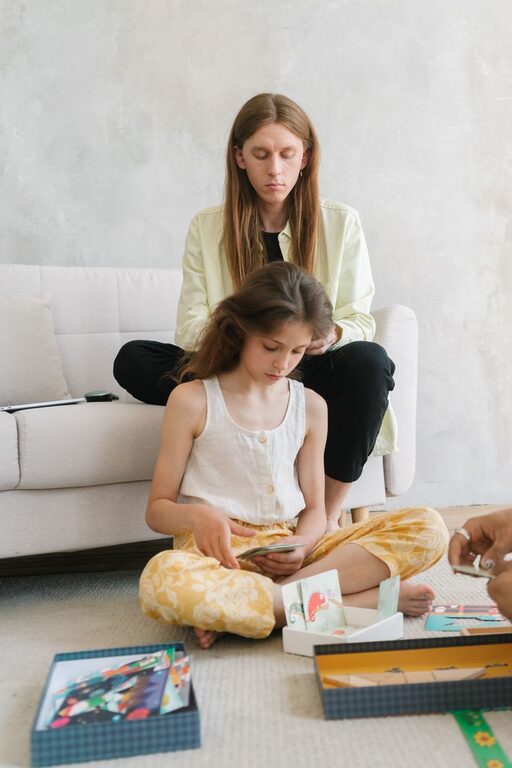
Family game night is a simple way to spend quality time together without planning an expensive outing. With a few games, easy snacks, and a comfortable space, you can create an evening that gives everyone a chance to laugh, think, and connect.
The best game nights do not need to be perfectly organized. Choose activities that match your family’s ages, interests, and energy levels. You can play classic board games, try a creative challenge, or invent your own family tradition.
How to Plan a Family Game Night
Before choosing the games, decide how formal you want the evening to be. Some families enjoy a scheduled tournament, while others prefer to choose activities as they go.
A few simple steps can help the night run smoothly:
– Choose a day when most family members are available.
– Set aside one to three hours, depending on everyone’s age and attention span.
– Pick games with clear rules and reasonable playing times.
– Prepare snacks and drinks before the first game begins.
– Keep a few backup activities ready in case a game is not a good fit.
– Focus on having fun rather than winning every round.
It can also help to create a screen-free area for the evening. Put phones aside when possible, and make sure the table or playing space has enough room for everyone.
1. Host a Classic Board Game Night
Classic board games are a great starting point because many people already know how to play them. Choose a mix of strategy, luck, and word games so that everyone has a chance to enjoy something.
You might include:
– A simple property or trading game
– A matching or memory game
– A word guessing game
– A tile or number game
– A cooperative board game
For younger children, choose games with short turns and simple instructions. Older children and adults may enjoy games that involve planning, teamwork, or friendly competition.
2. Organize a Family Game Tournament
A tournament can make several short games feel like one big event. Create a score sheet and award points for each round. For example, the winner could receive five points, second place could receive three points, and everyone else could receive one point for participating.
A tournament might include:
- A quick card game
- A word challenge
- A drawing round
- A trivia game
- A final team challenge
At the end of the night, announce the overall winner. To keep things lighthearted, add awards such as “best team player,” “most creative answer,” or “best sportsmanship.” These awards allow everyone to be recognized, not just the person with the highest score.
3. Try Cooperative Games
Not every game needs to have one winner. Cooperative games encourage family members to work together toward a shared goal. Players might solve a mystery, complete a mission, build something, or finish a challenge before time runs out.
Cooperative games can be especially helpful when younger and older players are playing together. Family members can share ideas and support one another instead of competing directly.
To make a cooperative game more engaging, give each player a role. One person might keep track of time, another might organize cards, and someone else might read the instructions. Rotating roles gives everyone a chance to contribute.
4. Create a Homemade Trivia Game
A homemade trivia game is easy to prepare and can be customized for your family. Write questions on slips of paper or place them in a bowl. Take turns reading a question while the other players answer.
Possible categories include:
– Family memories
– Animals
– Movies and books
– Food
– Nature
– Sports and hobbies
– General knowledge
You can also add questions about family favorites, such as “What is Grandma’s favorite dessert?” or “Which family member enjoys gardening?” Keep personal questions friendly and optional. The goal is to encourage conversation, not to test how well everyone remembers private details.
5. Plan a Charades Challenge
Charades requires little preparation and can be adapted for nearly any age group. Write simple words or phrases on cards, divide into teams, and take turns acting without speaking.
Use categories such as:
– Animals
– Everyday activities
– Jobs
– Favorite stories
– Sports
– Household objects
For younger children, use pictures instead of written words. You can also let children act out the clues while adults guess. Set a time limit for each turn to keep the game moving.
6. Have a Drawing and Guessing Contest
Drawing games are a fun choice for creative families. One player selects a word and draws it while the others try to guess what it is. Artistic skill is not important, and imperfect drawings often make the game more amusing.
For a different version, give everyone the same prompt and compare the results. Try prompts such as:
– A house on the moon
– A silly animal
– A dream playground
– A family vacation
– A robot at school
You can display the drawings at the end of the night and vote on categories such as “funniest picture” or “most surprising idea.”
7. Build a Family Scavenger Hunt
A scavenger hunt can take place indoors, outdoors, or in both areas. Prepare a list of items or clues for players to find. Make sure the search area is safe and that all clues are appropriate for the participants.
Examples include:
– Something soft
– Something that starts with the letter B
– A family photograph
– An object with a specific color
– Something that makes a sound
– An item that can be recycled
For younger children, use pictures or read the clues aloud. For older players, create riddles or divide the family into teams. Set clear boundaries and a time limit before the hunt begins.
8. Add a Snack Making Game
Food can become part of the entertainment. Set out simple ingredients and invite everyone to make a snack or decorate a treat. Choose foods that require little preparation and can be enjoyed during the games.
Ideas include:
– Build-your-own fruit skewers
– Decorated crackers
– Mini sandwiches
– Popcorn with different seasonings
– Personalized snack mix
– Fruit and yogurt cups
If children are helping, keep sharp tools and hot appliances with adults. You can also turn the activity into a taste test by asking everyone to rate the snacks for appearance, flavor, and creativity.
9. Play a Guess the Sound Game
This game only requires a few household objects and a way to hide them from view. One person makes a sound, and the others try to identify it. You can shake a container, tap a glass, zip a jacket, or crumple paper.
For a more challenging version, record several sounds in advance and play them in random order. Give players paper to write down their guesses. This quiet activity works well between more active games.
10. Make Game Night a Regular Tradition
A regular schedule can turn game night into a tradition everyone looks forward to. It does not need to happen every week. A monthly or seasonal gathering can work just as well.
Consider adding a few traditions:
– Let a different family member choose the games each time.
– Create a rotating snack menu.
– Keep a family scorebook.
– Take a photo at the end of each evening.
– Use a special tablecloth or set of cups.
– Finish with a favorite dessert.
Remember that the purpose of game night is to spend time together. Choose games that allow everyone to participate, be patient when rules need explaining, and keep competition friendly. With a little creativity, an ordinary evening at home can become a favorite family memory.