








Your entryway is the first part of your home that you see when you walk in, and it often becomes a drop zone for shoes, coats, bags, mail, and other daily items. When everything lands in one small area, clutter can build up quickly.
The good news is that an organized entryway does not require a large budget or a spacious foyer. With a few simple systems, you can create a tidy, useful space that makes leaving and returning home easier.
Start With a Quick Decluttering Session
Before adding baskets, hooks, or shelves, remove anything that does not belong in the entryway. Take everything out of the area and sort the items into three groups:
– Keep in the entryway
– Move to another room
– Donate, recycle, or discard
Be practical about what you truly need near the door. A small selection of everyday shoes, coats, and bags may be enough. Seasonal items, rarely used accessories, and extra supplies can be stored elsewhere.
Once the area is empty, wipe down the floor, walls, baseboards, and furniture. Starting with a clean space makes it easier to build an organization system that lasts.
Create a Home for Everyday Items
The easiest way to prevent clutter is to give each frequently used item a specific home. When things have a clear place, everyone in the household knows where to put them.
Think about the items that regularly collect near your door, such as:
– Keys
– Wallets
– Sunglasses
– Backpacks
– Shoes
– Coats
– Umbrellas
– Pet leashes
– Reusable shopping bags
Use a small tray for items you carry every day. A wall hook or shallow basket can hold other essentials. The best storage solution is one that is easy to use, especially when you are in a hurry.
Add Hooks for Coats and Bags
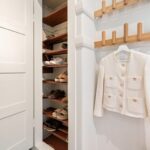
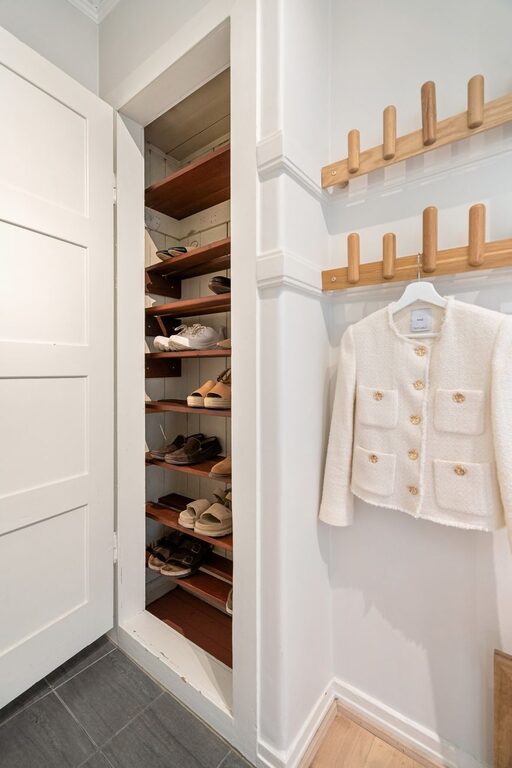
Hooks are one of the most useful entryway storage tools because they use vertical wall space. They also make it easy to hang coats and bags without opening a closet or folding anything.
Install a row of hooks at a comfortable height for adults. If children use the entryway, add a second, lower row so they can put away their own belongings.
You can use:
– Individual wall hooks
– A decorative peg rail
– Hooks attached to a narrow board
– Over-the-door hooks
– A freestanding coat rack
Avoid installing more hooks than you need. Extra hooks can encourage people to leave too many items in the entryway. Keep only current-season belongings in this area and store the rest in a closet or storage bin.
Organize Shoes With Simple Storage
Shoes are often one of the biggest sources of entryway clutter. A shoe rack, bench with compartments, or low shelf can keep footwear contained and off the floor.
Choose storage based on the size of your household and the available space. A narrow rack works well in a small hallway, while a storage bench can provide both seating and shoe storage.
To keep the area manageable:
– Store only regularly worn shoes near the door
– Keep pairs together
– Place less-used footwear in a closet
– Use a small mat for wet or muddy shoes
– Set a limit for how many pairs can stay out
If you prefer a shoe-free home, place a basket or tray near the entrance for slippers or indoor shoes. This makes the transition easier for family members and guests.
Make Use of Vertical Space
When floor space is limited, look up. Walls, doors, and the area above furniture can provide valuable storage without making the entryway feel crowded.
Consider adding:
– A tall, narrow bookcase
– Floating shelves
– A wall-mounted organizer
– A pegboard
– Hooks on the back of a door
– Baskets on high shelves
Keep frequently used items within easy reach and reserve higher storage for seasonal or occasional items. For safety, make sure wall-mounted shelves and hooks are properly attached and can support the weight of the items placed on them.
Set Up a Key and Mail Station
A small drop zone can prevent keys, mail, and other small items from spreading across tables and counters. Choose one location near the entrance and use it consistently.
A simple setup might include:
– A small bowl or tray for keys
– A wall pocket for incoming mail
– A hook for spare keys
– A small recycling container for unwanted paper
– A notepad for reminders
Sort mail as soon as possible. Recycle junk mail, place important items in a designated location, and avoid letting papers pile up. If you receive packages regularly, add a sturdy basket for items that need to be carried to another room.
Use Baskets to Control Small Clutter
Baskets are useful for containing items that do not need individual storage. They are especially helpful for scarves, gloves, hats, dog-walking supplies, and reusable bags.
Use one basket for each category rather than mixing everything together. For example, one basket can hold winter accessories, while another stores shopping bags.
Labels can help, but they are not always necessary. If the baskets are easy to identify and the system is simple, household members are more likely to use it. Choose baskets that fit neatly under a console table, on a shelf, or inside a cabinet.
Add a Small Seat
A place to sit can make the entryway more functional. A bench or compact stool provides a comfortable spot for putting on and removing shoes.
If you have limited space, consider:
– A narrow bench
– A storage ottoman
– A folding stool
– A small chair
– A wall-mounted seat
A bench with built-in storage can serve two purposes at once. Use the compartments for shoes, bags, or seasonal accessories. Keep the top mostly clear so it remains comfortable and useful.
Keep the Entryway Easy to Clean
Organization works best when the space is easy to maintain. Choose durable materials and storage that can handle everyday use.
A washable mat can protect the floor from dirt and moisture. Place it inside the door or just outside, depending on your home’s layout. Keep cleaning supplies nearby, such as a small brush, dustpan, or cloth, so small messes can be handled quickly.
Avoid overcrowding the floor with too many baskets or furniture pieces. The more open floor space you have, the easier it will be to sweep, vacuum, and mop.
Add a Few Welcoming Details
An organized entryway can also feel warm and personal. Once the practical storage is in place, add a few simple decorative touches.
Ideas include:
– A mirror for a last-minute check before leaving
– A small plant
– A framed print
– A simple lamp
– A seasonal wreath
– A decorative tray
Keep decorations limited so they do not interfere with storage. A clear surface and a few thoughtful details often look better than a crowded display.
Build a Daily Reset Routine
Even the best entryway system needs regular attention. A short daily reset can prevent clutter from becoming overwhelming.
At the end of each day:
- Return shoes to their rack or closet.
- Hang coats and bags on their hooks.
- Move items that belong in other rooms.
- Sort mail and papers.
- Empty baskets if they are becoming too full.
- Wipe up dirt or moisture from the floor.
Once a week, check whether the system is still working. You may need to remove seasonal items, adjust hook placement, or change the number of baskets.
Keep the System Simple
The most effective entryway organization ideas are easy to understand and quick to use. If putting something away takes too many steps, it will probably end up on the floor or a nearby table.
Focus on accessible storage, clear categories, and realistic limits. Use the space for the belongings you need every day, and store everything else somewhere more suitable. With a few thoughtful changes and a simple reset routine, your entryway can stay clean, welcoming, and ready for whatever the day brings.